
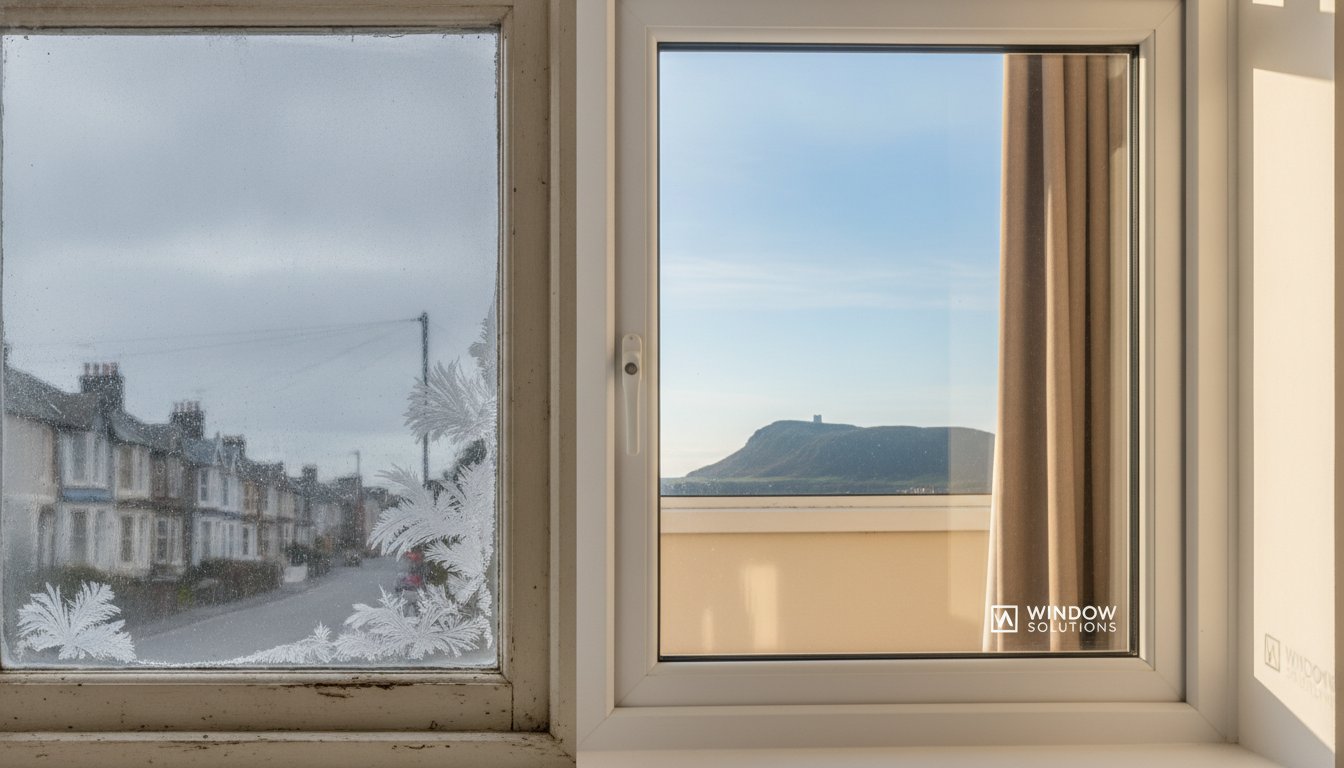
Why is your living room still freezing even when the heating has been running for hours? Most homeowners assume it’s just the British winter. The reality is usually more specific. If you have old windows losing heat, you’re essentially paying to warm the street outside. It’s a common frustration. You see the condensation on the glass. You feel the sharp draughts. Meanwhile, the monthly bills keep rising.
You deserve a home that stays warm. This guide will help you pinpoint exactly where your windows are failing. You’ll discover the most effective ways to stop energy loss. We’ll cover the latest Part L building regulations and the 0% VAT rate available until March 2027. You’ll also learn how to decide between a simple repair or a full replacement. By the end, you’ll know exactly how to achieve a warmer, more comfortable living space.
Key Takeaways
- Identify the main causes of old windows losing heat, from thin single-pane glass to perished weather seals.
- Learn how to conduct a 5-step DIY home audit to pinpoint exact air leaks using simple visual checks and the “candle test”.
- Discover effective temporary measures like draught-proofing strips and insulation film to reduce heat loss immediately.
- Understand the difference between a viable short-term repair and the “false economy” of fixing windows with structural damage.
- Gain expert advice on choosing high-performance double glazing that meets current UK building regulations and lowers energy bills.
Why Are Your Old Windows Losing Heat? The Main Culprits
Heat leaves your home through three physical processes: conduction, convection, and radiation. When you have old windows losing heat, they usually fail in all three areas at once. Single-pane glass is a major culprit. It offers almost no resistance to thermal conduction. Heat simply passes through the glass and vanishes outside. Most older units also lack Low-E coatings. These coatings are designed to reflect heat back into your room. Without them, energy radiates straight through the window.
It is also worth noting that while windows are a primary concern, a significant amount of heat is also lost through the roof and floors. For readers based in Scotland, ScotTherm Insulation at scottherminsulation.co.uk provides specialised services to address these other critical areas of home efficiency.
For a comprehensive overview of window insulation, we must look at the U-value. This measures how effectively a window prevents heat transfer. High U-values mean poor performance. Older windows often have U-values triple those of modern double glazing. This leads to the uncomfortable “cold wall” effect you feel when sitting near a window in winter. You’re effectively paying to heat the street.
Identifying Seal Failure and Misted Glazing
Modern windows rely on airtight seals to keep warmth in. Over time, rubber gaskets perish. They become brittle, crack, or shrink away from the frame. This allows cold air to bypass the glass entirely. If you have older double glazing, the internal seal of the glass unit may have failed. This is easy to spot. You’ll see misting or condensation trapped between the two panes of glass. This happens because the insulating gas has leaked out. Once the seal is broken, the window’s thermal efficiency drops significantly. It’s no longer a barrier; it’s just two pieces of glass with a pocket of damp air between them. Condensation on the inside of the pane is another warning sign. It suggests the glass surface is too cold, often because the unit is no longer insulating.
Draughts and Frame Deterioration
The local climate in North Wales places heavy demands on external joinery. Coastal winds and salt spray accelerate the wear on every component. Timber frames are prone to rot if they aren’t maintained perfectly. Once rot sets in, the wood softens and the frame loses its shape. Even older uPVC can warp after decades of temperature fluctuations. This leads to “daylight gaps” where the sash no longer sits flush against the frame. These gaps are essentially open holes in your wall. Failing hardware also plays a role. Worn hinges or broken locks prevent the window from pulling tight against its seals. If you can feel a breeze when the window is closed, the hardware or the frame itself has likely reached the end of its functional life. These physical gaps are the primary source of the draughts that make your living room feel uncomfortably cold.
How to Check Your Windows for Energy Loss: A 5-Step DIY Audit
Stop guessing why your home feels cold. A systematic audit is the only way to confirm if you have old windows losing heat or if the problem lies elsewhere. You don’t need specialist equipment to start. Begin with a thorough visual inspection of every window in the house. Look for “daylight gaps” where the window meets the frame. Check the external silicone sealant for cracks or peeling. If the sealant has pulled away from the masonry, air will bypass the frame entirely. Inside, look for moisture on the window sills. This often indicates a thermal bridge where heat is escaping rapidly.
The Candle Test for Draught Detection
Wait for a breezy day to perform this test. Close all internal doors and turn off any fans or extractors to keep the air still. Light a candle or an incense stick and move it slowly around the perimeter of the window sash. Watch the flame or smoke closely. If it flickers or bends, you’ve found a leak. Pay particular attention to the corners and the meeting rail where two sashes join. Mark these spots with a small piece of masking tape so you can address them later. It’s a simple but effective way to find specific failure points in your seals.
Whilst technical benchmarks like ENERGY STAR efficiency standards provide a guide for new units, your audit focuses on current performance. If the glass surface feels ice-cold compared to your walls, the unit is failing. You can use a budget-friendly thermal leak detector to find these cold spots. These devices show temperature variations across the glass and frame. Significant temperature drops usually mean the insulating gas has escaped or the Low-E coating is non-existent.
Inspecting Seals and Hardware
Open each window and examine the rubber gaskets. They should be soft and springy. If they feel brittle, flattened, or show visible cracks, they won’t create an airtight seal when closed. Test the handle and locking mechanism. The window should pull tightly into the frame with a firm “clunk”. If the handle feels loose or the sash wobbles when locked, the hardware isn’t providing enough compression. Check if the sash sits square. If one corner is lower than the others, the hinges have likely dropped, creating a permanent gap for heat to escape.
Document your findings for every room. Note whether the issues are isolated to one window or are consistent across the entire house. This record helps you decide if a quick fix will suffice or if the frames are beyond repair. If your audit reveals multiple failure points across several rooms, it might be time to view modern double glazing options that resolve these issues permanently. Knowing the scale of the problem is the first step toward a warmer home.
Temporary Solutions to Stop Heat Escaping (Whilst You Plan)
Fixing old windows losing heat doesn’t always require an immediate full-scale renovation. If you’ve identified specific leaks during your DIY audit, several low-cost measures can bridge the gap until a permanent solution is in place. These methods focus on blocking air movement and adding a layer of insulation. They are functional stop-gaps. They won’t solve the underlying structural issues, but they will make your home more comfortable during a cold snap.
Draught-Proofing Strips and Sealants
Self-adhesive draught strips are the most common quick fix. You have three main choices. Foam strips are inexpensive but compress quickly and often need replacing every season. Rubber P-strips offer a more durable seal for casement windows. Brush strips are best for the bottom of sash windows or sliding doors. Success depends entirely on the preparation. You must clean the window rebate thoroughly with methylated spirits or soapy water to remove grease and dust. Without a clean surface, the adhesive will fail within days. For non-opening gaps or cracks in a timber frame, apply a bead of clear silicone sealant. This provides a flexible, airtight barrier. Be careful not to seal the window shut if you need it for fire safety or ventilation.
Thermal Curtains and Window Film
Window insulation film is a cost-effective way to mimic the effect of double glazing. You apply the clear film to the frame using double-sided tape and then shrink it tight with a hairdryer. This creates a still layer of air between the film and the glass, which reduces thermal conduction. It’s a visible fix, but it works. Pairing this with heavy, thermal-lined curtains provides an extra barrier. These curtains use a dense weave to trap air and prevent convection currents from pulling heat toward the cold glass. Honeycomb or cellular blinds are another professional-looking option that creates individual pockets of insulating air.
You must use these temporary measures with caution. They can lead to hidden condensation issues. By sealing a window tightly with film, you trap moisture against the cold glass. This often results in mould growth on the window sills or frames if left unchecked. Unlike modern units designed with proper ventilation, these DIY fixes can accidentally block the necessary airflow that prevents damp. Whilst these methods help manage old windows losing heat, they are not a substitute for structural integrity.
Repair or Replace? Calculating the Real Cost of Inefficiency
Deciding whether to patch up a draught or invest in new frames is a common dilemma. If you have old windows losing heat, a quick repair often feels like the sensible choice. However, the cost of inefficiency adds up quickly. A simple seal replacement might stop a whistle, but it won’t fix a warped frame or an uninsulated glass surface. You need to weigh the immediate cost against the decade-long drain on your heating budget.
When a Simple Repair Isn’t Enough
Replacing just the glass unit is a popular suggestion. It’s often a false economy. If your uPVC frames have yellowed, become brittle, or warped over several decades, new glass won’t help. The air will simply leak around the edges. Draughty frames usually indicate that the internal chambers have failed or the mechanical hinges no longer provide enough compression. In timber windows, structural rot is a terminal issue. Patching over soft wood with filler is a temporary fix that fails to address the thermal bridge. When the frame itself has reached the end of its life, only a full replacement restores the home’s thermal envelope.
Long-term ROI of Energy-Efficient Glazing
Modern windows are an investment in the structure of your home. According to the Energy Saving Trust (February 2026), upgrading to A-rated double glazing can save a detached household up to £175 per year on energy bills. Over a ten-year period, these savings are substantial. This financial return is bolstered by the current 0% VAT rate on energy-saving materials, which remains in place until March 2027. Beyond the monthly bills, there is the question of property value. In North Wales, high-quality glazing can increase a home’s market value by 5-10% according to data from ExpertSure (February 2026). This is particularly true in coastal areas where buyers prioritise weather-proof, low-maintenance materials.
Modern A-rated windows pay for themselves through reduced heating demand.
The comfort factor is equally important. New windows eliminate the cold spots and noise pollution that plague older properties. You’ll no longer need to keep the thermostat high just to compensate for a draughty living room. If your audit showed house-wide failures, it is time to stop patching and start planning. Request a quote for double glazed windows to see how a permanent upgrade fits your budget.
Upgrading to Modern Double Glazing with Ashe Windows
Resolving the issue of old windows losing heat requires more than just a standard replacement. In North Wales, the local climate is a significant factor. Coastal winds and salt-heavy air demand materials that are both durable and thermally efficient. We specialise in high-performance double glazed windows designed to withstand these specific conditions. Our frames aren’t just aesthetic upgrades. They are engineered to exceed the latest Part L building regulations, ensuring your home meets the current maximum U-value requirement of 1.4 W/m²K.
We understand the architectural diversity of Llandudno. Whether you live in a traditional Victorian terrace or a modern coastal property, our bespoke styles ensure a perfect match. We offer a range of colours and finishes that maintain the character of your home whilst providing the benefits of 21st-century insulation technology. This approach eliminates the “false economy” of cheap repairs and provides a long-term solution to energy loss.
High-Performance Glass for North Wales Homes
The glass units we install are a significant step up from older technology. We use Argon gas-filled units as standard. Argon is denser than air, which significantly slows down the transfer of heat across the cavity. This is paired with Low-E (low-emissivity) coatings. These microscopic layers reflect heat back into your living space rather than letting it escape through the pane. For homes in exposed areas, we also provide toughened glass options. This increases the structural durability of the window against high winds and improves overall home security.
Expert Installation in Llandudno
A high-quality window will fail if it’s fitted poorly. Professional installation is the only way to ensure the thermal envelope of your home remains intact. Our Llandudno-based team focuses on precision. We ensure every frame is perfectly square and the perimeter seals are airtight. This prevents the “daylight gaps” and draughts that are common with rushed or DIY installations. We take pride in a clean and efficient process. Our installers protect your carpets and furniture, ensuring we leave your home as tidy as we found it.
If you’re tired of cold draughts and high energy bills, it’s time for a professional perspective. Contact Ashe Windows today for a free home energy assessment. We’ll help you identify the best way to secure your home against the winter and lower your heating costs for years to come.
Take Action for a Warmer Home
Identifying exactly where your home is failing is the first step toward lower energy bills. Whether you found draughts through a DIY audit or spotted misting between the panes, you now have a clear picture of the problem. Managing old windows losing heat with temporary film or curtains helps during a cold snap. However, these methods don’t address the structural rot or warped frames that cause the most significant energy loss over time.
Investing in modern, A-rated double glazing is a practical long-term solution. It improves your property value and eliminates the uncomfortable cold spots typical of North Wales coastal homes. As a local independent window specialist, we focus on delivering reliable results that last. You can depend on our team for expert installation and high-quality materials tailored to our local climate. A warmer, more efficient home is within reach.
Request a free quote for energy-efficient windows from Ashe Windows
Frequently Asked Questions
How can I tell if my old windows are losing heat?
You can identify heat loss by feeling for physical draughts around the frame or checking for cold spots on the glass surface. Use a candle or incense stick near the window edges on a windy day to see if the flame flickers. If the glass feels significantly colder than your internal walls, the unit is no longer providing an effective thermal barrier.
Is it worth replacing 20-year-old double glazing?
Yes, because older units rarely meet modern energy standards. Windows from twenty years ago often lack the Low-E coatings and Argon gas fills that are standard today. Replacing them helps you meet current Part L building regulations, which require a maximum U-value of 1.4 W/m²K for replacement windows. Modern A-rated units offer vastly superior thermal retention.
Can you fix a draughty window without replacing it?
You can use temporary measures like self-adhesive draught strips, brush seals, or clear silicone sealant for non-opening gaps. These are functional stop-gaps for old windows losing heat. However, if the draught is caused by a warped uPVC frame or structural timber rot, these repairs won’t solve the underlying issue. A full replacement is usually necessary for permanent comfort.
Why do I have condensation on the inside of my windows?
Internal condensation occurs when warm, moist air hits a cold glass surface. This suggests the window’s thermal performance is poor, making the glass surface temperature drop below the dew point. Whilst improving ventilation helps, upgrading to high-performance double glazing keeps the internal pane warmer and reduces the likelihood of moisture forming.
How much can I save on heating with new double glazed windows?
Replacing single glazing with A-rated double glazing can save up to £175 per year for a detached house or £140 for a semi-detached property. These statistics from the Energy Saving Trust (February 2026) highlight the direct impact of efficiency. You also benefit from the 0% VAT rate on energy-saving materials until March 2027, reducing the initial investment cost.
What is the best way to stop heat escaping through windows in winter?
Installing high-performance double glazing with Low-E glass is the most effective method. For a shorter-term fix, use thermal-lined curtains or honeycomb blinds to trap a layer of air. Window insulation film can also create a temporary secondary barrier. These methods help, but they don’t provide the same structural integrity as modern, professionally fitted frames.
Installing high-performance double glazing with Low-E glass is the most effective method. For a shorter-term fix, use thermal-lined curtains or honeycomb blinds to trap a layer of air. Window insulation film can also create a temporary secondary barrier. These methods help, but they don’t provide the same structural integrity as modern, professionally fitted frames; you can find out more about how high-quality installation ensures your home remains energy efficient.
Does double glazing lose its effectiveness over time?
Double glazing typically has a functional lifespan of 20 to 30 years before the seals begin to fail. Over time, the internal gas can leak out and the rubber gaskets can become brittle. This is a primary reason for old windows losing heat. Once the seal is compromised, the window’s ability to prevent thermal conduction drops significantly.
What are the signs that window seals have failed?
Misting or fogging between the two panes of glass is the most definitive sign of seal failure. You should also look for flattened or cracked rubber gaskets around the sash. If the window no longer pulls tightly into the frame when locked, the mechanical seal is likely broken, allowing cold air to bypass the glass entirely.