
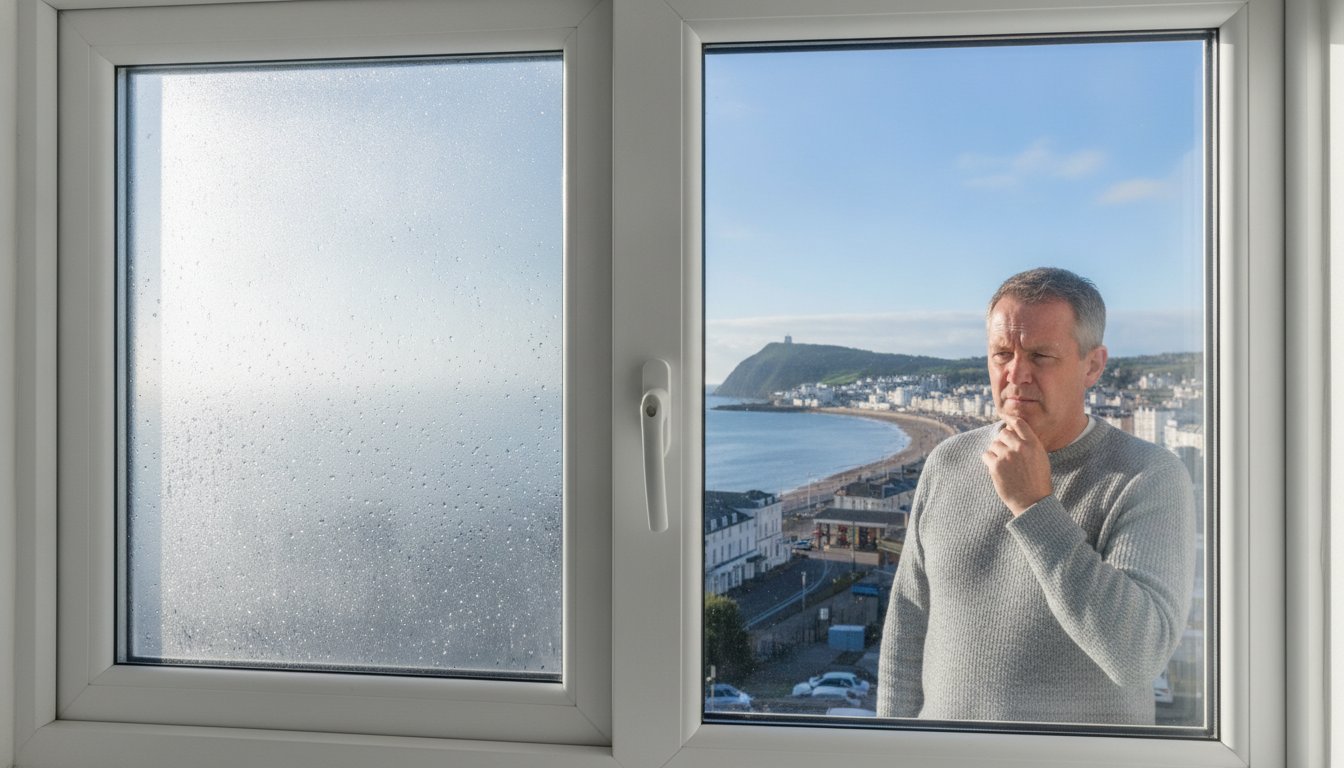
Have you ever spent several minutes trying to wipe away a persistent foggy patch on your window, only to realise the moisture is trapped where you can’t reach it? It’s a common frustration for many homeowners. This misting is a clear sign of seal failure, which means your double glazing is no longer performing as it should. When you see condensation between window panes, it’s more than just a cosmetic issue. It’s a sign that your home is losing heat, which often leads to rising energy bills.
We know the worry of being told you need entirely new windows when a targeted repair might be the better option. This guide explains exactly why these seals fail and how you can restore your view. You’ll learn about the latest 2026 standards, including the 0% VAT relief on energy-saving materials and current building regulations regarding U-values. We provide a straightforward look at the difference between replacing a single glass unit and a full frame upgrade, helping you make an informed choice for your home’s efficiency and your budget.
Key Takeaways
- Understand why condensation between window panes indicates a structural failure of the hermetic seal within the glass unit.
- Recognise how “solar pumping” and harsh coastal conditions in North Wales can accelerate the breakdown of your double glazing.
- Discover why replacing the glass unit is a more reliable and cost-effective solution than temporary “drilling and drying” methods.
- Identify the specific signs that determine whether you need a simple glass repair or a full frame replacement.
- Learn how 2026 building regulations and 0% VAT incentives help reduce the cost of restoring your home’s energy efficiency.
What causes condensation between window panes?
Seeing moisture trapped where you can’t reach it is a frustrating experience. This phenomenon, known as inter-pane condensation, occurs when the airtight environment between two sheets of glass is compromised. A standard double-glazed window is an Insulated glazing unit (IGU). It consists of two panes of glass separated by a spacer bar and sealed around the edges to create a hermetic seal.
The primary culprit is a breached or perished perimeter seal. Over time, the sealant that bonds the glass to the spacer bar degrades. Once this happens, the dry air or argon gas inside the unit escapes. Argon is used because it is more viscous than air, providing a better barrier against heat loss. When the gas leaks out, outside air containing water vapour pulls in. This is the start of condensation between window panes. It marks the point where your window stops acting as an insulator and starts acting as a bridge for heat to escape your home.
The difference between internal, external, and inter-pane condensation
Not all window moisture is cause for alarm. Internal condensation usually happens in kitchens or bathrooms. It’s simply high humidity from cooking or showering hitting a cold surface. You can fix this with better ventilation. External condensation often appears on high-performance windows during autumn mornings. It shows the outer pane is cold because the heat isn’t escaping from your house. This is a sign of good insulation. However, moisture between the panes is different. It indicates a permanent seal failure that cannot be wiped away or fixed with a dehumidifier.
The role of the spacer bar and desiccant
The spacer bar does more than just hold the glass apart. It contains desiccant, which is a material made of small silica pellets. These pellets are designed to absorb any residual moisture that was present during the manufacturing process. They keep the air inside the unit bone-dry. Every desiccant has a specific “saturation point”. Think of it like a sponge that can only hold a certain amount of water.
Once the perimeter seal is breached, the desiccant works overtime to absorb the incoming moisture. Eventually, it cannot hold any more. At this stage, the moisture begins to condense on the glass surfaces. This is why a window might look clear for years and then suddenly become misted overnight. The desiccant has simply reached its limit.
Common reasons for “blown” double glazing
“Blown” is the industry term for a failed unit. It describes the moment the airtight environment between the glass is lost. Most double glazing has a lifespan of between 15 and 25 years. After this period, the materials simply reach the end of their functional life. One of the most common physical causes of failure is “solar pumping”. During the day, sunlight heats the gas between the panes, causing it to expand. At night, the unit cools and the gas contracts. This cycle is relentless. It puts constant pressure on the perimeter seal. Over thousands of cycles, the seal eventually develops microscopic cracks.
According to standards supported by the Window & Door Manufacturers Association, these thermal stresses are a primary factor in seal degradation. Once a tiny breach occurs, moisture-laden air is drawn in during the contraction phase. This leads to visible condensation between window panes. It isn’t a sign of a “broken” window in the sense of shattered glass, but it is a structural failure of the unit’s insulation system.
Age and natural wear-and-tear
UV exposure is a silent killer for window sealants. Decades of direct sunlight make the primary seal brittle and less flexible. First-generation double glazing, particularly units installed in the early 1990s, are now reaching a critical failure point across the UK. If you notice one window in your home has misted up, it’s often a sign that the rest of the windows from that same installation period are nearing the end of their life. It’s usually more efficient to replace several units at once rather than dealing with them one by one as they fail.
Poor installation and maintenance
Not every failure is down to age. Manufacturing defects can cause newer units to fail within just a few years. However, poor installation is a frequent culprit. If the glass isn’t “packed” correctly within the frame, it can shift slightly. This movement puts uneven pressure on the seal, causing it to pull away from the glass surface. Maintenance habits matter too. Using aggressive solvent-based cleaners on the edges of the glass can eat away at the sealant over time.
Perhaps the most overlooked issue is blocked drainage. Every uPVC window frame has “weep holes” designed to let water escape from the internal rebate. If these become blocked with dirt or debris, water sits against the bottom of the glass unit. Constant contact with standing water will eventually rot the seal of even a high-quality unit. If you’re concerned about the state of your seals, checking your window frames for clear drainage is a good first step to preventing early failure.
Can you fix misted double glazing or should you replace it?
Homeowners often look for a quick fix when they first spot condensation between window panes. You might find advice online suggesting that you can “repair” the unit by drilling small holes in the glass to vent the moisture. While this might temporarily clear the fog, it is not a cure. Drilling holes permanently destroys the thermal performance of the window. It lets the insulating gas escape and allows fresh, damp air to circulate. This effectively turns your double glazing into two single panes of glass with a gap in the middle. You lose the energy efficiency you paid for and the U-value of the window plummets.
The only professional way to fix a misted window is to replace the failed unit. However, this doesn’t always mean you need to buy an entirely new window. In the vast majority of cases, the uPVC or aluminium frame remains structurally sound even if the seal has perished. By focusing on the glass rather than the whole fixture, you can restore your home’s thermal barrier without the cost of a full replacement. A new factory-sealed unit ensures that the argon gas is retained and the desiccant is fresh, providing years of clarity.
The “Glass-Only” replacement solution
A “glass-only” replacement involves swapping the failed Insulated Glass Unit (IGU) for a new one. The process is straightforward and causes very little disruption to your home. A technician removes the plastic glazing beads on the inside of the frame, takes out the old glass, and fits the new unit. This typically takes a short amount of time per window. It is the most cost-effective way to deal with seal failure, especially if your frames are still in good condition. You get the benefit of modern, energy-efficient glass without the mess or expense of a full installation.
When to consider a full frame replacement
There are times when replacing just the glass isn’t enough. If your frames are warped, cracked, or let in significant draughts, the frame itself is the problem. You should also check for mechanical failures in the hinges or locking systems that can’t be easily repaired. A full replacement is also a good opportunity to update the look of your property. Many people choose to move away from standard white uPVC in favour of modern Anthracite Grey or realistic wood-effect finishes. If you are already planning a larger home improvement project, such as an extension or a conservatory upgrade, replacing the full window sets ensures a consistent aesthetic and maximum energy performance across the whole building. For homeowners exploring complete replacement solutions, specialists such as Galaxy Home Remodeling illustrate how upgrading to contemporary designs like double-hung windows can deliver superior insulation and practical ventilation.

Coastal factors: Why North Wales homes face more condensation
Living on the North Wales coast brings unique challenges for double glazing. While the views are stunning, the environment is harsh. High wind speeds and salt-laden air create a difficult environment for window seals. This explains why condensation between window panes is a more frequent complaint in Llandudno and Colwyn Bay than in more sheltered inland towns. The combination of physical pressure from the wind and the corrosive nature of salt can shorten the lifespan of standard units significantly.
Salt air is a significant factor that many national installers overlook. Salt is naturally corrosive and acts as a desiccant, drawing moisture out of materials. Over time, salt spray can cause external mastics and window seals to become brittle. Once the sealant loses its elasticity, it can no longer cope with the natural movement of the window. Additionally, the temperature contrast in North Wales is sharp. Coastal areas stay relatively mild due to the sea, but just a few miles inland in the valleys, temperatures can drop significantly at night. These rapid shifts in temperature accelerate the expansion and contraction cycles that lead to condensation between window panes.
Wind pressure and “Solar Pumping” in Llandudno
Gale-force winds common in coastal areas put physical pressure on the glass. This is known as wind loading. When a strong gust hits a large window, the glass actually flexes slightly. This movement pulls at the perimeter seal. When you combine this with the “solar pumping” effect mentioned earlier, the seal is under constant mechanical stress. South-facing windows suffer more from heat expansion, while North-facing windows often bear the brunt of the prevailing winds. For these exposed properties, using high-performance seals is essential to prevent early failure. Local knowledge of these weather patterns is vital when choosing the right specification for your replacement glass.
Seasonal maintenance for coastal properties
A little preventative care goes a long way in a coastal environment. We recommend a simple maintenance routine to protect your windows:
- Wash your window frames every few months with fresh water to remove salt crust. This prevents the “weep holes” from clogging.
- Organise an annual check of the external mastic seal. If the sealant between the frame and the brickwork is cracking, moisture can settle around the unit.
- Inspect your windows after a harsh winter storm. Look for the first signs of misting or a “rainbow” effect on the glass, which indicates the seal is starting to fail.
If you’ve noticed fogging after the last big storm, it’s worth getting a professional opinion from a local expert who understands the North Wales climate. You can request a window assessment from Ashe Windows to see if a glass-only replacement is right for your home.
Professional window solutions from Ashe Windows
Ashe Windows is a local Llandudno specialist in double glazing and home improvements. We provide practical solutions for homeowners dealing with condensation between window panes across North Wales. As a family-run business, we rely on our reputation for honesty and reliability. We don’t use high-pressure sales tactics or exaggerated marketing claims. Instead, we offer a straightforward service that prioritises the needs of our customers and the efficiency of their homes.
Our approach is grounded in quiet confidence. We understand that every home is different. When you contact us about misted windows, we provide a no-nonsense assessment. If your window frames are structurally sound, we will recommend a glass-only replacement. This saves you money whilst restoring the thermal performance of your property. We use high-quality, energy-efficient glass units that meet the latest 2026 building regulations. These units are designed to withstand the specific coastal conditions of our region, ensuring your view remains clear for years to come.
Our process for fixing failed double glazing
We’ve developed a methodical process to ensure every repair is handled efficiently. It begins with a local assessment of your “blown” windows. Our team identifies exactly which units have failed and checks the condition of the existing frames. We then take precise measurements to ensure a perfect fit. Every replacement unit is bespoke and manufactured to high industry standards. Finally, our Llandudno-based installation team swaps the glass. We focus on a clean, professional finish with minimal disruption to your daily routine.
Beyond windows: Composite doors and extensions
Identifying condensation between window panes often prompts a wider review of a home’s energy efficiency. A failed seal is a sign that your property’s thermal envelope is compromised. We help homeowners address these issues through a range of services. Beyond glass replacement, we install high-performance composite external doors and double-glazed external doors. These products offer superior insulation and security compared to older timber or uPVC models.
For those specifically interested in the construction of timber frames or bespoke joinery, you can discover Bondrite Adhesives Ltd to learn more about the specialist adhesives used in these applications.
For those looking to add value and space, we also specialise in bespoke garden rooms, home extensions, and conservatories. We can even provide warm roof conservatory upgrades to transform an underused space into a year-round room. Whether you need a single pane of glass or a full home improvement project, we apply the same professional standards to every job. Contact Ashe Windows today for a professional window assessment to restore the clarity and comfort of your home.
Restore Your Home’s Efficiency and View
Addressing the fog in your windows is about more than just aesthetics. It’s a vital step in maintaining your home’s thermal performance and managing energy costs. We’ve seen that condensation between window panes is a clear indicator of a failed seal. However, this doesn’t always necessitate a full, expensive window replacement. For many properties in North Wales, a professional glass-only swap is the most sensible path forward. This approach targets the specific failure whilst keeping your existing frames intact.
Ashe Windows is a local Llandudno independent specialist. Our expert installation team uses high-quality energy-efficient glazing designed to withstand our unique coastal climate. We focus on providing clear, honest advice so you can make the right choice for your budget. Don’t let failing seals drive up your heating bills or spoil your view of the coast. Get a professional quote for your misted windows from Ashe Windows. Taking action now ensures your home stays warm and efficient throughout the year.
Frequently Asked Questions
Is it worth fixing condensation between window panes?
Yes, addressing condensation between window panes is highly cost-effective because it prevents heat loss and stops moisture from damaging the internal window rebate. Replacing just the glass unit is significantly cheaper than a full frame replacement and restores the window’s original insulating properties immediately. It also improves the kerb appeal and value of your property, particularly when coordinated as part of a broader residential remodel alongside general contracting specialists like NEXERA Home Renovations.
Does misted double glazing cause mould in the home?
Yes, it can lead to mould growth. A failed unit creates a cold spot on the inner pane because the insulating gas has escaped. This causes moisture from the room to condense on the surface of the glass and frame. Over time, this dampness encourages black mould to grow on the surrounding plasterwork and window seals, which can impact air quality.
How long does it take to replace a blown window unit?
A standard glass unit replacement typically takes about an hour to complete. This includes removing the old beads, swapping the glass, and ensuring the new unit is properly packed and sealed. It is a clean process that doesn’t require any structural work to your walls, making it much faster than a full frame installation.
Can I replace the glass myself to save money?
It is possible but rarely advisable for most homeowners. Measuring glass units requires millimetre-perfect accuracy to ensure the new unit fits the existing beads and frame depth correctly. Professional installers also have the correct tools to remove beads without snapping them or scratching the uPVC, which is a common risk with DIY attempts.
Will insurance cover the cost of failed window seals?
Most standard home insurance policies do not cover failed window seals. Insurers typically categorise seal failure as general wear and tear or a maintenance issue rather than accidental damage or a sudden event. You should check your specific policy wording, but a claim for a misted window is unlikely to be successful.
How can I tell if my window warranty is still valid?
Look for a date stamp or a manufacturer’s mark on the spacer bar inside the glass unit. This often indicates when the window was manufactured. Most reputable installers provide a 5 or 10-year guarantee on the seal. If you can’t find a stamp, you’ll need to check your original installation paperwork or contact the company that fitted them.
Does condensation between panes mean my house will be colder?
Yes, your home will be less efficient. When the seal fails, the insulating argon gas escapes and is replaced by damp air. This increases the window’s U-value, meaning heat passes through the glass more easily. You’ll likely notice a chill near the window and may see your heating bills rise as your system works harder to maintain temperature.
What is the average lifespan of a modern double glazed unit?
A modern double-glazed unit usually lasts between 15 and 25 years. The exact lifespan depends on the quality of the original installation and the environmental conditions. Windows on exposed coastal properties or those facing direct sunlight often reach the end of their life sooner due to the increased thermal stress on the seals.