
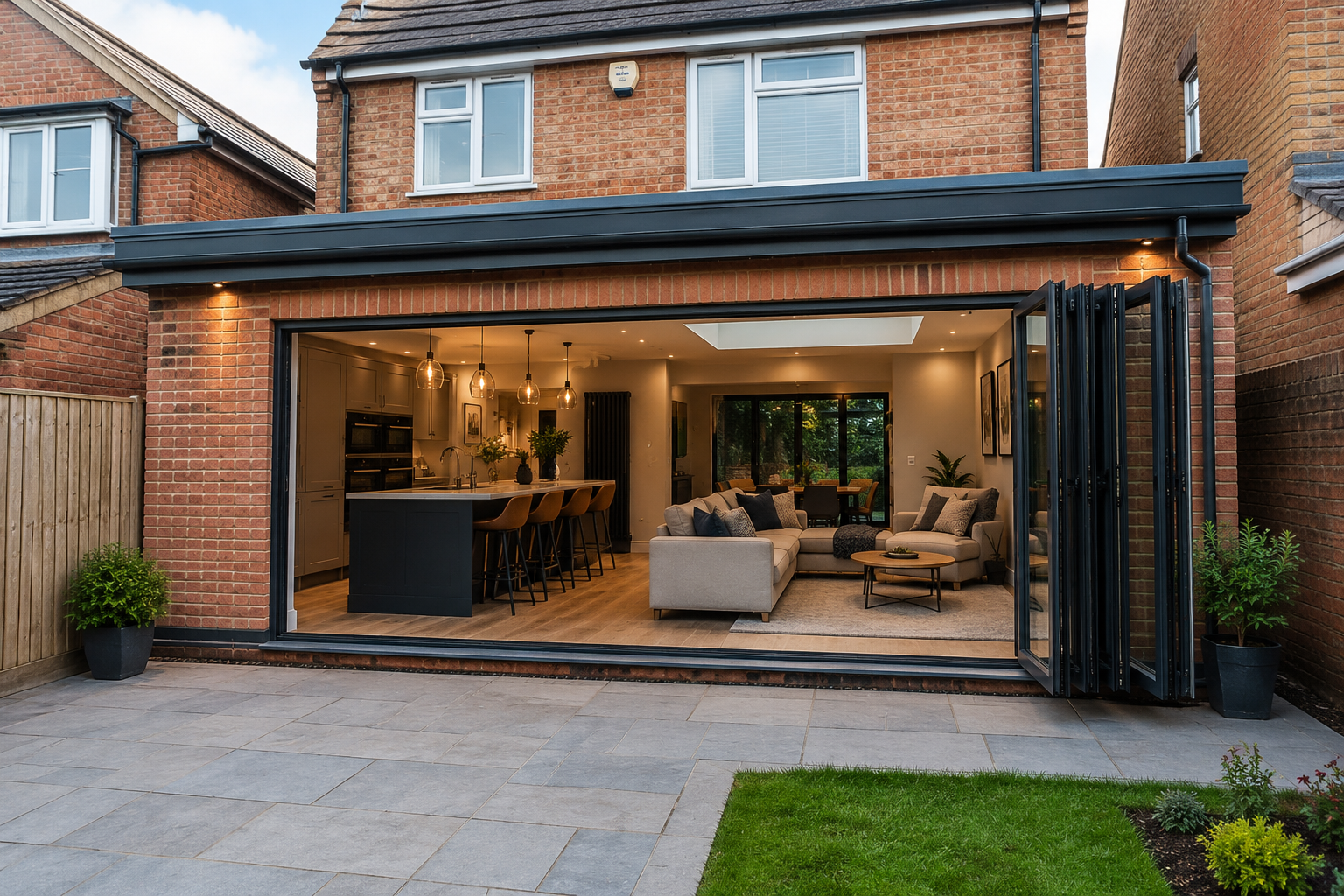
Are you considering an extension for your North Wales home?
If so, you’re likely asking one crucial question: is it a sound financial investment? For many homeowners, the decision isn’t just about gaining extra space; it’s about adding real, measurable value to their property. The fear of overspending or choosing the wrong type of extension is a common concern, especially with the unique property market we have in North Wales, from Llandudno’s Victorian terraces to coastal cottages along the Llyn Peninsula and more modern homes in Colwyn Bay and Rhyl.
This guide cuts through the noise. We’ll explore exactly how adding value to your home with an extension works in the North Wales market. We’ll look at which projects offer the best return on investment, how to avoid the dreaded “ceiling price” trap, and why modern, energy-efficient designs are now a key driver of property value in 2026.
- Does a house extension really add value? A North Wales perspective
- Which extension types offer the best return on investment?
- Extension, Conservatory, or Garden Room: Which adds the most value?
- How to Avoid the "Ceiling Price" Trap in North Wales
- Why you should plan your extension with a North Wales specialist
- Frequently asked questions
Does a house extension really add value? A North Wales perspective
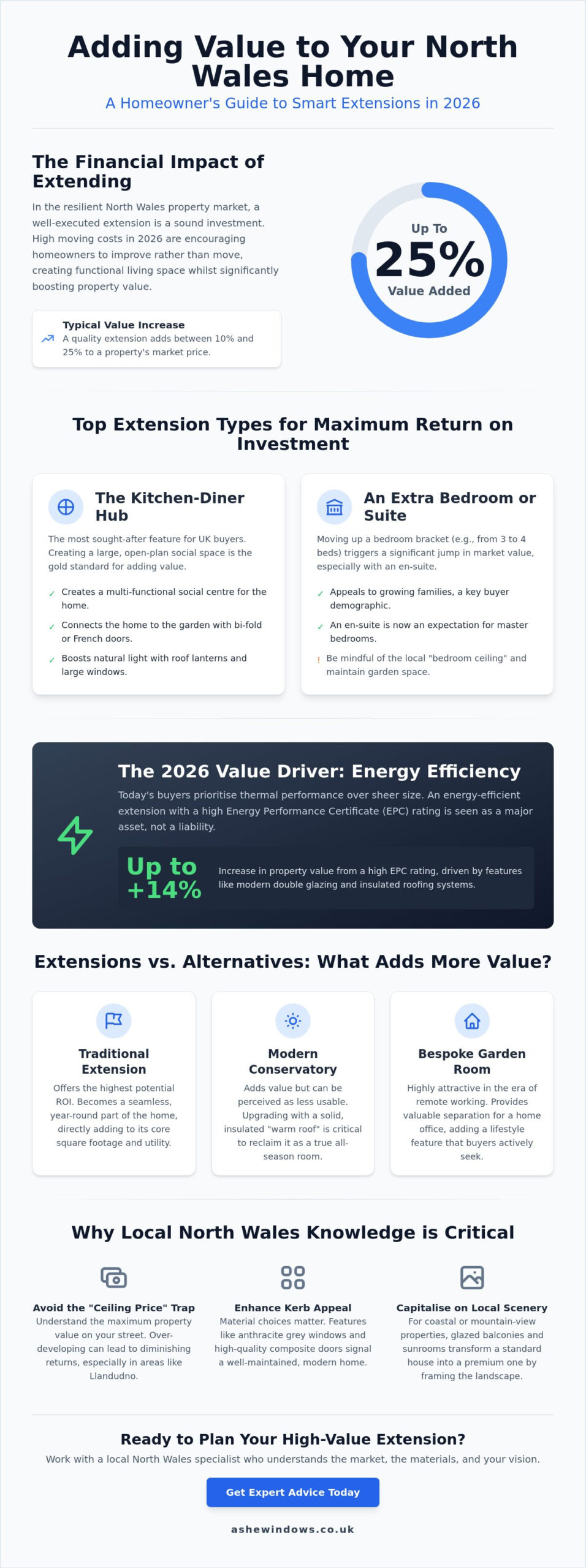
The short answer is yes. A well-designed and professionally built extension almost always adds value to a property. The general consensus amongst property experts is that a home extension can increase your property’s value by anywhere from 10% to 25%. However, the final figure depends heavily on the type of extension, the quality of the work, and, most importantly, the local market conditions here in North Wales.
In 2026, with rising moving costs, many North Wales homeowners are choosing to improve rather than move. An extension allows you to create your ideal home without the stress and expense of relocating. Beyond extra square footage, a thoughtfully designed extension enhances a property’s kerb appeal. The quality of materials used, such as modern anthracite grey windows or a solid composite door, also significantly influences a buyer’s perception and the final valuation.
Typical Return on Investment for North Wales property types
Not all homes benefit from the same type of extension. Understanding your property’s style is key to maximising your return on investment (ROI).
- Victorian and Edwardian Terraces: Common in areas like Llandudno and Rhyl, these homes often have a narrow footprint. A single-storey rear extension that creates a large, open-plan kitchen-diner is often the most valuable addition, transforming a series of small, dark rooms into a bright, modern living space.
- Semi-Detached Family Homes: For the thousands of 1930s to 1970s semis across North Wales, creating a “hub of the home” is the top priority. A kitchen-diner extension, often with bi-fold doors opening onto the garden, adds immense value and appeal for family buyers.
- Detached Coastal Properties: Homes with sea views can see a significant value boost from extensions that maximise this asset. Glazed balconies, sunrooms with large windows, or extensions with roof lanterns bring in natural light and frame the stunning local scenery, which is a huge selling point.
The 2026 shift: Energy efficiency as a value driver
In today’s market, buyers are looking for more than just extra space. Energy efficiency has become a primary factor in a home’s desirability and value. A poorly insulated, draughty extension can be a liability, but a warm, efficient one is a major asset.
- Buyer Priorities: Prospective buyers now scrutinise a home’s running costs. They prioritise thermal performance, meaning an extension that is warm in winter and cool in summer is more valuable than a larger, less efficient one.
- EPC Impact: High-performance double glazing and insulated warm roofs dramatically improve your home’s Energy Performance Certificate (EPC). This certificate grades your property’s energy efficiency from A (most efficient) to G (least efficient).
A high EPC rating can increase property value by up to 14%, making energy-efficient upgrades a direct investment in your home’s resale price.
Which extension types offer the best return on investment?
While any extra space is useful, certain types of extensions consistently deliver a higher return on investment. The key is to add space that aligns with what buyers are looking for.
- Kitchen-Diner Extensions: This is the gold standard. A spacious, open-plan kitchen and dining area is the most sought-after feature for UK buyers, creating a social hub for family life and entertaining.
- Extra Bedrooms with En-suites: Moving from a three-bed to a four-bed house often pushes a property into a higher price bracket. Adding an en-suite to a new or existing master bedroom is now an expected feature in a modern family home.
- Home Offices and Bespoke Garden Rooms: The shift towards flexible and remote working is permanent. A dedicated workspace, whether as a small extension or a high-quality, insulated garden room, adds significant appeal and value.
- Structural Conservatories with Warm Roof Upgrades: Many older conservatories are wasted space—too hot in summer and freezing in winter. Upgrading to a solid, insulated warm roof transforms it into a year-round, functional room, adding value comparable to a small extension for a fraction of the cost.
The Kitchen-Diner: The heart of property value
Creating a large, multi-functional kitchen-diner is arguably the single best way to add value to your home. It’s not just about cooking; it’s about creating a lifestyle that buyers want to invest in.
- Open-Plan Living: Often, removing internal walls to connect the kitchen with a dining or living area adds more perceived value than building a new structure. It makes the home feel larger, brighter, and more sociable.
- Indoor-Outdoor Connection: Integrating the garden is crucial. The addition of stylish bi-fold or French doors creates a seamless flow between your indoor and outdoor spaces, perfect for the Welsh summer.
- Natural Light: A bright space feels luxurious. Using roof lanterns, skylights, and large windows floods the extension with natural light, making it feel more spacious and welcoming.
Adding a Bedroom or Master Suite
An extra bedroom is a reliable way of adding value, but there are important considerations to ensure you get the best return.
- The “Bedroom Ceiling”: Be aware of the norm on your street. If every other house is a three-bed, turning yours into a five-bed might not deliver a proportional return. Research local property prices to understand the value jump between three, four, and five-bedroom homes in your area.
- The En-Suite Essential: In 2026, a master bedroom without an en-suite can be a deal-breaker for many buyers. If you are adding a new main bedroom, incorporating a private bathroom is a must for maximising value.
- Garden vs. Indoor Space: Don’t sacrifice your entire garden for a huge extension. A balanced property with a reasonable amount of outdoor space is more attractive to buyers than a massive house with only a small patio.
Extension, Conservatory, or Garden Room: Which adds the most value?
Choosing the right structure for your budget and needs is vital. Each option offers a different balance of cost, disruption, and potential value uplift.
- Traditional Brick Extensions: These are the most expensive option but offer the highest potential ROI. They feel like a permanent, seamless part of the home and are perfect for creating large kitchen-diners or master suites.
- Modern Conservatories: A lower-cost way to add a sun-filled room. However, older, uninsulated models are often seen as “seasonal” spaces, adding less value. Modern glazing technology has improved this, but buyer perception can still be a factor.
- Warm Roof Conservatory Upgrades: This is the hybrid solution that is rapidly growing in popularity. By replacing an old glass or polycarbonate roof with a solid, insulated “warm roof,” you convert a dated conservatory into a fully functional room. This adds “extension-level” value at a much lower cost than a new build.
- Bespoke Garden Rooms: No longer just a glorified shed, a high-quality garden room is a flexible and valuable asset. Insulated, powered, and double-glazed, it can serve as a home office, gym, or guest annexe, adding significant appeal without the disruption of a traditional extension.
The Warm Roof revolution
If you have an old conservatory that you rarely use, a warm roof upgrade is one of the most cost-effective home improvements you can make. It solves the “too hot, too cold” problem permanently.
- Create a Habitable Room: A warm roof transforms a conservatory into a comfortable space you can use 365 days a year, effectively adding a new reception room to your home.
- Buyer Preference: Homebuyers now understand the difference. They see a solid roof as a sign of a usable, energy-efficient space, whereas a glass roof can be perceived as a potential source of heating bills and maintenance.
- Cost-Effectiveness: Upgrading an existing structure is significantly cheaper and faster than building a new extension from the ground up, yet it adds a similar level of functional living space and value.
The Rise of the Bespoke Garden Room
The garden room has evolved into a serious contender for adding value, especially for properties needing a dedicated workspace.
- Planning Permission Advantages: Many garden rooms fall under “permitted development” rights, meaning they often don’t require a full planning application, saving time and money. (You must always check with your local council).
- Remote Worker Appeal: A separate, quiet office space is a huge selling point for the growing number of remote and hybrid workers. It allows for a clear separation between home and work life.
- Quality is Key: To add real value, it must be a high-quality structure. An insulated, double-glazed garden room with proper heating and electrics is seen as a permanent asset, whereas a basic wooden shed adds very little.
How to Avoid the “Ceiling Price” Trap in North Wales
This is one of the biggest risks when extending. You can spend a significant amount on a beautiful extension, only to find you haven’t increased your home’s value by the same amount. This happens when you hit the “ceiling price” for your street.
- What is a “Ceiling Price”? It’s the maximum price a buyer is willing to pay for a property in a specific location, regardless of how big or luxurious it is. If the best house on your street sold for £350,000, it’s unlikely yours will sell for £450,000, even with a £100,000 extension.
- Research is Crucial: Before you start, research recent sold prices for similar properties in your immediate area (Llandudno, Conwy, etc.) on websites like Rightmove or Zoopla. This will give you a realistic idea of your home’s potential maximum value.
- The Over-Development Risk: Be careful not to create the biggest and most expensive house on the street. A £100,000 extension that only adds £50,000 in value is a poor financial return. The goal is for the value added to exceed the cost of the project.
- Personal Enjoyment vs. ROI: Sometimes, it’s okay to “overspend” if the extension is for your long-term personal enjoyment rather than a short-term financial gain. Just be aware of the financial implications before you commit.
Extend or Move? The 2026 Calculation
Before committing to an extension, it’s wise to calculate the cost of moving to a larger house. Often, extending is the more financially sensible option.
- Factor in Moving Costs: Remember to include Land Transaction Tax (LTT) in Wales, estate agent fees, solicitor fees, and removal costs. Moving costs in North Wales can often exceed £15,000, making an extension a more viable financial option.
- Stress vs. Disruption: Compare the emotional cost. Is the short-term disruption of building work preferable to the stress of house hunting, chains breaking, and the upheaval of a full relocation?
Planning Permission and Building Regulations
Navigating the legal requirements is a non-negotiable part of any extension project. Getting it wrong can be costly and may even prevent you from selling your home in the future.
- Permitted Development: Many smaller, single-storey rear extensions fall under Permitted Development rights, which means you don’t need full planning permission. However, the rules are strict and you must comply with all conditions.
- Local Restrictions: Be aware of local constraints. If you live in a Conservation Area, like parts of Llandudno, an Area of Outstanding Natural Beauty (AONB) or the Eryri National Park, your Permitted Development rights will be restricted, and you will almost certainly need to apply for planning permission. Always check with your local council first.
- Professional Certification: All work must comply with Building Regulations. At the end of the project, you need a completion certificate from Building Control. These documents are essential for when you come to sell your property.
Why you should plan your extension with a North Wales specialist
Building an extension is a major project. Choosing a contractor with deep-rooted local knowledge is essential for a smooth process and a high-quality result that adds maximum value.
- Local Knowledge is Key: A local specialist understands the specific challenges and opportunities of building in North Wales, from dealing with the coastal weather to sourcing materials like slate or stone that complement local architectural styles.
- The Ashe Windows Approach: We combine structural expertise with a deep understanding of premium glazing. We ensure your new space is not only built to last but is also filled with light and highly energy-efficient, thanks to our market-leading windows and doors.
- Navigating Planning: An experienced local builder will have a strong working relationship with the local planning departments in Conwy, Gwynedd, Denbigshire, Flintshire and Wrexham, helping to guide your project through the approval process more efficiently.
Quality Glazing: The finishing touch that adds value
The windows and doors you choose for your extension are not just a finishing touch; they are fundamental to its performance, security, and aesthetic appeal.
- Matching Styles: We can help you select window styles—from classic sash to modern casement—that perfectly match both your new extension and the existing character of your home.
- Enhanced Security: A new extension is a potential entry point. Installing a high-security composite door and windows with multi-point locking systems provides peace of mind and is a key feature for buyers.
- All-Year Comfort: Our A-rated double glazing ensures your new space remains warm and comfortable throughout the Welsh winter, keeping energy bills low and adding to the overall value of the extension.
Ready to Transform Your Home?
If you are ready to explore how an extension, garden room, or warm roof upgrade could add value and space to your North Wales property, our team is here to help with a bespoke, no-obligation quote for your project.
Get a free quote nowFrequently asked questions
How much value does a 30-square-metre extension add?
A 30m² kitchen-diner extension could add between 15-20% to the value of an average North Wales property, provided it is well-designed and the project cost doesn’t exceed the local property price ceiling.
Do I need planning permission for a small extension in Llandudno?
Possibly. While many small extensions fall under Permitted Development, Llandudno has several conservation areas where these rights are restricted. It is essential to check with Conwy County Borough Council’s planning department before starting any work.
Is a garden room or a brick extension better for property value?
A brick extension typically adds more absolute value as it increases the home’s official square footage. However, a high-quality, insulated garden room can offer a better return on investment, as it costs less to build but adds significant appeal for buyers seeking a home office or hobby room.
What type of extension adds the most value to a house in North Wales?
A brick extension typically adds more absolute value as it increases the home’s official square footage. However, a high-quality, insulated garden room can offer a better return on investment, as it costs less to build but adds significant appeal for buyers seeking a home office or hobby room.
How long does a typical home extension take to build in 2026?
A straightforward single-storey rear extension can take between 3 to 6 months from the start of construction to completion. This does not include the time required for the design and planning permission phases, which can add several more months.
Will a new conservatory roof increase my home’s resale price?
Yes. Upgrading an old polycarbonate or glass roof to a modern, solid insulated “warm roof” transforms the space into a year-round room. This adds significant value as buyers see it as a functional extension rather than a seasonal conservatory.
How can I find out the ceiling price for properties in my area?
How does energy efficiency impact the value of my extension?
It has a huge impact. An energy-efficient extension with high-performance double glazing and good insulation will improve your home’s overall EPC rating. A better EPC rating is very attractive to buyers and can increase your property’s value by as much as 14%.